
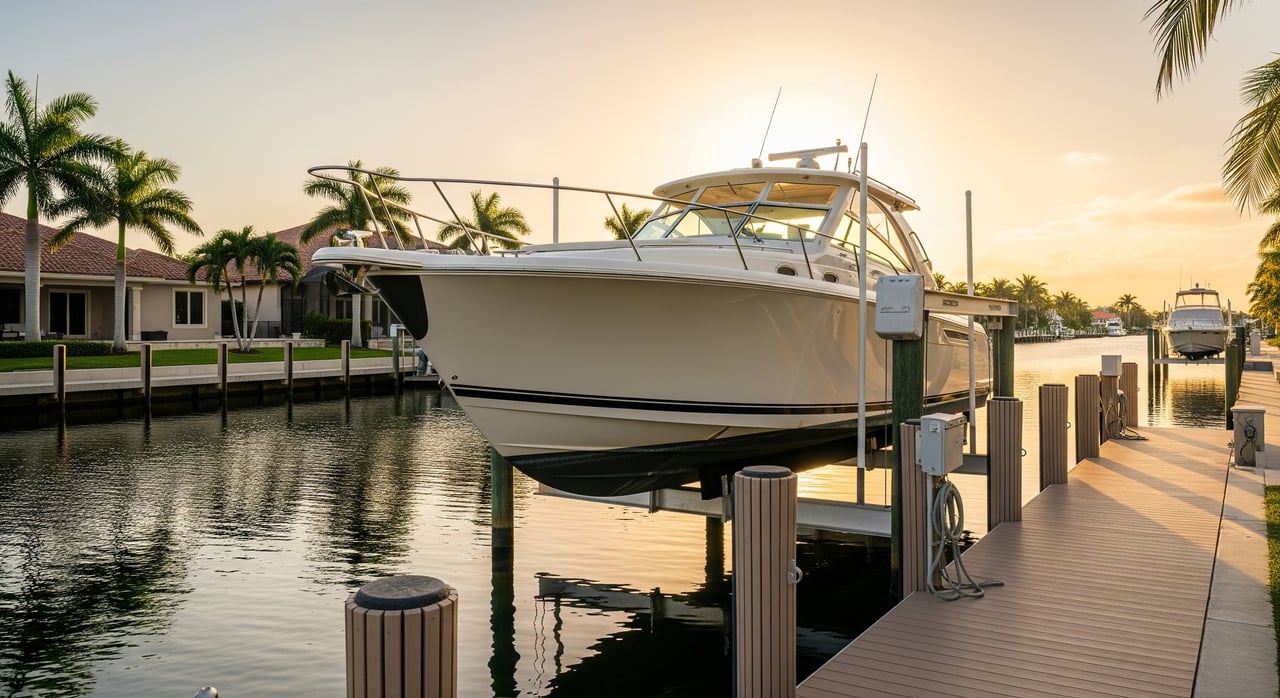
Planning a new boat lift on your Royal Harbor dock, or buying a home that needs one? In this part of Naples, your lift choice affects daily convenience, long-term maintenance, and storm readiness. You also deal with saltwater, tides, and boat traffic that can create wakes. In this guide, you’ll learn how to choose the right lift for your boat and site, what materials hold up in saltwater, the permits to expect, and a simple checklist to get you started. Let’s dive in.
Why lift choice matters in Royal Harbor
Royal Harbor canals connect to Naples Bay and the Gulf of Mexico, so you’re in a saltwater, tidal environment. That means corrosion resistance, vertical clearance, and storm-season plans matter as much as the lift itself. You also see a range of boats here, from center consoles and bay boats to pontoons and small cruisers. Your lift must match your primary vessel and how often you use it.
Start with your site and boat
Before you compare brands, confirm your site and boat specs. This prevents costly missteps and speeds up permitting.
Measure water depth and clearance
Check water depth at your dock at the lowest tide so the boat can float onto the lift without grounding. Note the distance to the navigation channel and any obstructions. Look for overhead lines and bridge clearance on your path to open water.
Check dock layout and pilings
Count existing pilings and measure spacing. Confirm if you can drive new pilings if needed. Note whether your dock is fixed or floating and how you plan to transfer on and off the boat.
Gather boat specifications
Write down the make, model, beam, draft, height, and fully loaded weight. Include fuel, gear, water, engines, and people when estimating. Your lift capacity and bunk spacing must support these numbers.
Lift types that work in Royal Harbor
Different lifts shine in different conditions. Match the lift to your hull type, water depth, and daily use.
Vertical lifts
These raise your boat straight up on guide posts or pilings. They offer strong clearance above the water and work well in open, tidal areas. They fit a range of weights and hulls, including center consoles and cruisers. Installation is more involved and the structure is visible above the waterline.
Cradle or bunk lifts
A cradle with carpeted or plastic bunks supports the hull and lifts by motor or hydraulics. You get even support and adjustable bunks, which is great for long-term storage out of the water. Make sure bunks match your hull shape, and plan for periodic bunk wear.
Sling or strap lifts
Slings cradle the hull with minimal pressure points and can be a good option for aluminum boats, simple hulls, and PWCs. They lift fast and avoid fixed bunks. Strap placement is critical, and they are less common for very heavy boats.
Floating lifts
Floating platforms use buoyancy to lift and can require fewer pilings. This helps where water depth is limited. They are more exposed to wakes and tides and may need more maintenance on floats and anchoring.
Pontoon-specific lifts
Pontoons need wide, distributed support. Choose a platform or cradle designed for double- or tri-toon hulls with appropriate capacity and bunk spacing. Standard V-hull bunks are not suitable for pontoons.
Capacity and fit
Sizing is where most mistakes happen. Confirm your numbers before ordering.
Choose the right capacity
Start with the boat’s dry weight and add fuel, water, gear, engines, and people. Select a lift with a 20 to 30 percent safety margin above the loaded weight, then verify with the manufacturer. This margin reduces wear and improves reliability.
Match beam and support
The bunks or cradle must line up with the boat maker’s lift points. For wide-beam boats and pontoons, pick a model dimensioned for beam and with widely spaced supports. Catamarans and multi-hulls require custom cradles.
Check draft, depth, and vertical clearance
Confirm enough depth at the lowest tide to float on and off the lift without grounding. Also plan for height when the boat is on the lift and for any bridges or lines along your route. Proper vertical clearance avoids damage and delays.
Materials for saltwater
Saltwater eats poor materials. Choose components that resist corrosion and plan for protection.
- Aluminum frames: Marine-grade aluminum is light and corrosion-resistant, common for frames and rails.
- Galvanized steel: Strong and cost-effective for larger capacities, but needs robust coatings and maintenance in saltwater.
- Stainless hardware: Use marine-grade stainless steel for fasteners and critical parts.
- Composites and polyethylene floats: Useful on floating lifts to reduce maintenance.
Add sacrificial anodes where recommended and inspect them regularly. Avoid dissimilar-metal contact and use isolation where needed to reduce galvanic corrosion. Have electrical systems installed by a licensed marine electrician with GFCI protection.
Permits and approvals
Plan for permits before ordering equipment or scheduling install dates. Requirements vary by property and scope.
- Collier County Growth Management and Building Division: Typical dock and shoreline permitting for most properties.
- City of Naples Building Division: If your home is inside city limits, confirm municipal rules.
- Florida Department of Environmental Protection: For work on or over state submerged lands and environmental resource permitting.
- U.S. Army Corps of Engineers: For structures in navigable waters when applicable.
- HOA or community guidelines: Some neighborhoods set limits on lift size, style, or timing.
Steps to take:
- Confirm whether your property is in the City of Naples or unincorporated Collier County, then contact the correct building division.
- Ask about FDEP and USACE requirements based on your planned work.
- Review HOA rules for allowable lift types and locations.
- Hire a marine contractor experienced with Naples and Collier County permitting. Request engineered drawings if required.
Use, safety, and storms
Daily convenience matters when you boat often. Consider electric or hydraulic drives, remote controls, auto-stop limit switches, piling guides, and motor enclosures. Confirm local service and parts availability and get the manufacturer warranty in writing.
Follow a routine maintenance schedule:
- Inspect and lubricate moving parts.
- Check cables, straps, and fasteners for wear and corrosion.
- Replace sacrificial anodes as needed and rinse components with fresh water.
- Test controls, limit switches, and GFCI devices. Consider an annual check by a marine electrician.
- Clean bunks and floats to limit growth and improve launch performance.
For hurricane season, follow the manufacturer’s storm protocol and local guidance. Some owners secure the boat on the lift, while others remove it to inland storage for major storms. Secure or remove covers and loose items and disconnect shore power as recommended.
A simple decision path
When you compare options, prioritize in this order:
- Capacity with a proper safety margin.
- Hull support type that matches your boat.
- Corrosion-resistant materials suited to saltwater.
- Ease of daily use and reliability.
- Permit feasibility and community aesthetics.
- Storm-season handling plan.
Quick homeowner checklist
Use this to prepare for quotes and permitting:
- Boat make and model:
- Estimated loaded weight (dry + fuel + gear + people):
- Beam, draft, and overall height:
- Water depth at dock at lowest tide:
- Distance from bulkhead to channel:
- Existing pilings and spacing; can new pilings be driven:
- Dock type (fixed or floating):
- Overhead obstructions and bridge clearance along your route:
- Exposure to wakes and prevailing winds:
- HOA rules or deed restrictions to follow:
Buying or selling in Royal Harbor?
A well-matched, permitted boat lift can protect your boat and enhance day-to-day enjoyment. It can also influence buyer confidence when you sell. If you are weighing upgrades, comparing homes with different dock setups, or preparing to list, connect with Brian J Giacomello, LLC for local guidance tailored to Royal Harbor waterfront living.
FAQs
Can I install a boat lift at my Royal Harbor home?
- Many homeowners can, but eligibility depends on property boundaries, local rules, and site specifics. Confirm city vs county jurisdiction and consult the appropriate agencies before you begin.
What lift capacity do I need for my boat?
- Add dry weight plus fuel, water, gear, engines, and people. Choose a lift with a 20 to 30 percent safety margin above that loaded weight and verify with the manufacturer.
Which lift types work best in Naples saltwater?
- Marine-grade aluminum frames with stainless hardware perform well. Cradle or vertical lifts are popular for V-hulls, while pontoon-specific platforms are best for toons.
How do tides and depth affect lift selection?
- You need enough water at the lowest tide to float onto the lift without grounding and sufficient vertical clearance under any bridges or lines along your route.
Will a lift protect my boat during a hurricane?
- A lift keeps your hull out of the water in normal conditions, but major storms can damage lifts. Follow the maker’s storm guidance and consider moving the boat to inland storage for significant events.
Do I need engineered plans for my lift?
- Larger lifts or new pilings may require engineered drawings and inspections. Your marine contractor can advise based on local permitting requirements.